Northern Virginia Storm Damage Roof Claims: Fairfax, Arlington and Alexandria Guide
The suburban sprawl of Northern Virginia — Fairfax, Arlington, Alexandria, and the surrounding communities — hides a storm damage problem that catches many homeowners off guard. Severe thunderstorms barrel through the region every spring and summer, dropping hail across subdivisions and driving wind gusts that strip shingles from roof after roof along the Dulles corridor and into the Beltway suburbs. Northern Virginia’s rapid growth over the past two decades has filled the landscape with newer homes, but newer doesn’t mean immune. If you’re facing roof damage after a storm, here’s how to file a storm damage roof insurance claim in Virginia with the specifics that Northern Virginia homeowners need.
Common Storm Damage Types in Northern Virginia
Northern Virginia catches severe weather from two directions — systems pushing east from the Blue Ridge and storms tracking north along the I-95 corridor. This double exposure produces more storm events than many homeowners expect from a suburban market.
Hail is the primary culprit. Summer thunderstorms routinely produce hailstones across Fairfax County, Loudoun County, and Prince William County. Even quarter-sized hail cracks shingle surfaces and strips the protective granule layer. Newer subdivisions in Ashburn, Centreville, and South Riding use builder-grade shingles that perform poorly under hail — they meet code minimums but lack the impact resistance of premium materials.
Wind damage follows closely behind. Straight-line winds from derecho events have hit Northern Virginia hard in recent years, with gusts exceeding 70 mph. These winds peel back shingle courses, rip off ridge caps, and tear fascia boards away from the roofline. Homes on exposed lots without mature tree windbreaks take the worst hits. Townhome communities in Reston, Herndon, and Springfield see concentrated wind damage because connected rooflines create a continuous surface for wind to exploit.
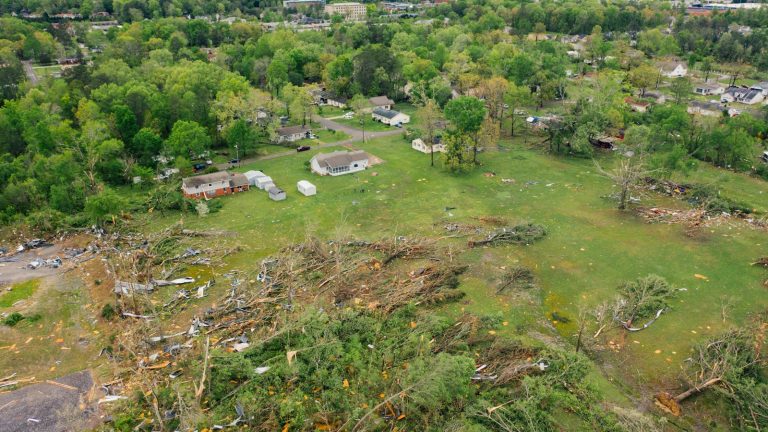
Fallen trees and limbs cause severe damage in established neighborhoods. Arlington’s mature canopy, McLean’s wooded lots, and Alexandria’s Old Town-adjacent areas all produce heavy debris during storms. A single limb puncture can open a roof deck and cause thousands in water damage within one rainfall.
Wind-driven rain penetrates through gaps that stay dry during normal weather. Flashing around dormers, skylights, and chimney intersections fails under sustained horizontal rain. Homes with complex rooflines — common in Northern Virginia’s custom-built neighborhoods — have more penetration points.
How to Document Roof Storm Damage for Your Insurance Claim
Documentation wins or loses your storm damage roof claim in Northern Virginia. Insurance adjusters in this market handle enormous volumes after storms, so your evidence needs to stand on its own.
Step 1: Exterior photos immediately. Walk the full perimeter and photograph every sign of damage — missing shingles, dented gutters, displaced flashing, scattered debris. Capture wide views of each roof face and close-ups of specific damage. Timestamp every shot.
Step 2: Interior evidence. Check attic spaces, ceilings, and walls for water stains, wet insulation, and active drips. Photograph all interior signs of water entry. These connect exterior damage to real intrusion.
Step 3: Weather documentation. The NWS Sterling office covers Northern Virginia. Download the storm report for your date and zip code — confirmed hail sizes, wind measurements, and damage reports all support your claim.
Step 4: Professional inspection. Hire a DPOR-licensed roofing contractor for a full roof inspection with written report and photos. They catch bruised shingles, compromised flashings, and cracked pipe boots invisible from the ground.
Step 5: File within 48 hours. Virginia requires prompt notice under your policy terms. The Virginia Bureau of Insurance handles complaints about delayed or unfairly denied claims.
For active leaks, arrange emergency roof tarping after storm damage before your adjuster visits. Your policy covers reasonable emergency mitigation costs.
Don’t wait for damage to spread. Get a free roofing estimate from a Northern Virginia contractor who handles local claims daily.
What Your Homeowners Insurance Covers — and What It Doesn’t
Virginia HO-3 policies cover sudden storm damage — hail, wind, fallen trees, lightning. Your insurer pays repair or replacement costs minus your deductible.
The most common claim complication in Northern Virginia involves HOA restrictions conflicting with insurance-approved materials. Many Fairfax and Loudoun County HOAs mandate specific shingle brands, colors, and profiles. Your insurance company approves the cheapest “like kind and quality” replacement, but your HOA demands a more expensive product that matches the community standard. When these conflict, you’re caught in the middle. Document your HOA’s architectural standards in writing and present them to your adjuster. Virginia law requires insurers to cover code-mandated upgrades — argue that enforceable HOA covenants function similarly.
Percentage-based wind/hail deductibles are common in Northern Virginia policies. A 2% deductible on a $600,000 Fairfax home means $12,000 before coverage applies. Know your deductible structure before filing.
Builder-grade materials on newer homes create another problem. Many Northern Virginia subdivisions built in the last 15 years used three-tab or basic architectural shingles that don’t withstand hail well. Insurers sometimes argue these materials reached “expected lifespan” prematurely due to design rather than storm impact. Your contractor’s report documenting specific storm-caused damage patterns counters this argument.
Flood damage isn’t covered under standard policies. Northern Virginia’s creeks and flood plains — particularly along Four Mile Run, Holmes Run, and Cameron Run — require separate NFIP coverage.
How to Find a Storm Damage Roofing Contractor in Northern Virginia
Northern Virginia’s affluent market attracts storm chasers from across the country after major hail events. They target high-value homes knowing insurance payouts will be larger. Having worked Mid-Atlantic roofs for 36 years, I’ve watched this cycle repeat in Fairfax and Loudoun counties after every significant storm.
Virginia requires DPOR (Department of Professional and Occupational Regulation) licensing for all roofing contractors. Verify license class and status before signing anything. Most Northern Virginia roof replacements exceed $10,000 and require at least a Class B license.
HOA experience matters in this market. Your contractor needs to understand architectural review board requirements, submit material samples for approval, and coordinate timing with community management. A contractor unfamiliar with HOA processes creates delays that complicate your insurance claim timeline.
Verify general liability and workers’ compensation coverage. Never sign an Assignment of Benefits (AOB) transferring claim control to the contractor.
Red flags in Northern Virginia: door-to-door solicitation immediately after storms, no verifiable local business address, offers to cover your deductible (fraud under Virginia law), and contractors who can’t provide Northern Virginia HOA project references.
Timeline: From Storm to Settled Claim
Northern Virginia storm claims follow Virginia’s insurance regulation timelines.
Day 1-2: Document damage and file. Your insurer acknowledges the claim within 15 calendar days.
Day 3-15: Adjuster inspection. Northern Virginia’s high claim volume after storms can push toward the longer end.
Day 15-30: Initial estimate delivered. Compare against your contractor’s scope — HOA material requirements often drive cost differences.
Day 30-45: Negotiate disagreements. Joint re-inspection with your contractor resolves most disputes.
Day 45-90: Repairs completed and final payment released. HOA architectural review adds time — factor in two to four weeks for board approval before work begins.
Contact the Virginia Bureau of Insurance if your insurer stalls beyond reasonable timeframes.
Related Roofing Resources
- Richmond storm damage roof claims
- Virginia Beach storm damage claims
- Whether homeowners insurance covers roof replacement
Frequently Asked Questions
Can my HOA force me to use materials different from what insurance covers?
Yes, your HOA can enforce its architectural standards. The conflict arises when insurance covers a cheaper option than your HOA requires. Present your HOA covenants to your adjuster and argue for “like kind and quality” that matches community standards. If your insurer refuses, the Virginia Bureau of Insurance can review whether the denial is fair. You may need to pay the difference out of pocket in some cases.
Does Northern Virginia get enough hail to justify filing a claim?
Northern Virginia averages multiple significant hail events per year, concentrated from May through September. Even moderate hail damages the builder-grade shingles common on newer homes in this area. A professional inspection determines whether the damage exceeds your deductible threshold. Don’t assume minor-looking damage isn’t worth filing — hidden granule loss shortens roof life dramatically.
What if my townhome’s roof is damaged but my neighbor’s isn’t?
Connected rooflines on townhomes don’t always sustain uniform damage. Wind direction, hail trajectory, and roof orientation create different exposure on each unit. Your claim covers your individual unit’s roof section. However, inform your HOA because shared structural elements like ridge beams and party wall flashing may need coordinated repair.
How do I handle storm damage on a new-construction home still under builder warranty?
Storm damage falls under your homeowners insurance, not the builder warranty. Builder warranties typically exclude damage from weather events. File with your insurer and use a licensed independent contractor — not the original builder — for the inspection and repair estimate. Builders have financial incentive to minimize damage assessments.
For full pricing on Northern Virginia roof replacements, check our guide on roof replacement cost Northern Virginia.
Prince George’s County homeowners across the Beltway face similar storms under Maryland insurance rules — read our guide on storm damage roof claims in Prince George’s County for the Maryland perspective.
Roof damage after a Northern Virginia storm compounds fast — the next rain drives water deeper into your decking and framing. Get a free roofing estimate today and lock down repairs before conditions worsen.