Signs You Need a Roof Replacement: What East Coast Homeowners Miss
East Coast homeowners in Maryland, Virginia, Washington DC, and Pennsylvania often miss the early warning signs that their roof needs replacement — until a major leak, a failed insurance claim, or a home sale inspection forces the issue. The Mid-Atlantic’s demanding climate accelerates roof aging in ways that aren’t always obvious from the ground. This guide highlights the signs that your roof is nearing the end of its life, including the subtle indicators that many homeowners overlook until it’s too late.
Sign #1: Your Roof Is Approaching Its Expected Lifespan
The most fundamental indicator is age. In the Mid-Atlantic climate, roofing materials don’t always last as long as their rated lifespans suggest — compare roofing materials for Mid-Atlantic weather to understand why:
3-tab asphalt shingles: Rated for 20–25 years, but typically last 15–20 years in the Mid-Atlantic due to heat, UV, and storm exposure. For more details, see our guide on roof replacement cost in Washington DC.
Architectural shingles: Rated for 30–50 years (depending on product), but realistically last 25–35 years in our climate.
Metal roofing: 40–70 years. Metal holds up well in the Mid-Atlantic and typically meets or exceeds its rated lifespan.
Slate: 75–150+ years. Most slate roofs in the Mid-Atlantic fail due to flashing deterioration or nail rust rather than the slate itself.
What homeowners miss: Many people don’t know how old their roof is, especially if they bought the home after the last replacement. Check closing documents, seller disclosures, or permit records with your local building department. If your roof is within 5 years of its expected lifespan, start planning — don’t wait for a failure.
Sign #2: Granule Loss and Bald Spots on Shingles
Granule loss is one of the most reliable indicators of shingle deterioration, and it’s easy to check:
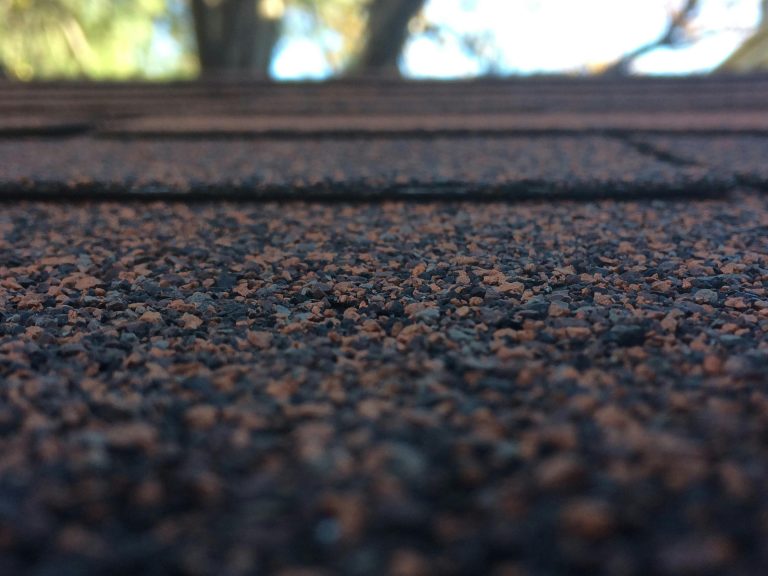
Check your gutters: After a rainstorm, look in your gutters and at the bottom of your downspouts. A moderate amount of granules is normal for new shingles (they shed excess granules initially). But significant granule accumulation from a roof that’s 10+ years old indicates the shingles are breaking down.
Look for dark patches: From the ground (use binoculars), look for dark spots or patches on your shingles where granules have worn away, exposing the asphalt substrate. These bald spots are particularly visible after rain when the dark areas contrast with the granulated surface.
Why it matters: Granules protect shingles from UV radiation and impact. Once they’re gone, the asphalt beneath dries out and cracks rapidly — especially during Mid-Atlantic summers when surface temperatures on a dark roof can exceed 150°F.
What homeowners miss: Granule loss is gradual and hard to notice from the ground until it’s severe. Most people never check their gutters for granules. By the time bald spots are visible from the driveway, the shingles are significantly degraded.
Sign #3: Curling, Cupping, and Buckling Shingles
Shingle distortion is a clear sign of aging and weathering:
Curling: Shingle edges turn upward (cupping) or the middle bubbles up (clawing). Both indicate moisture damage and loss of the shingle’s flexibility. In the Mid-Atlantic, this is often caused by years of heat cycling — hot summer days followed by cooler nights, repeated thousands of times.
Buckling: Shingles develop a visible wave or ridge, often in vertical lines. This is typically caused by poor attic ventilation (trapping heat and moisture below the roof deck) or improperly installed underlayment that wrinkled over time.
Why it matters in the Mid-Atlantic: Curled and buckled shingles can’t shed water properly and are extremely vulnerable to wind uplift. During a Mid-Atlantic thunderstorm with 60+ mph winds, curled shingles become the first to tear off, exposing the underlayment or deck beneath.
Sign #4: Damaged or Missing Flashing
Flashing — the metal strips that seal transitions between the roof and chimneys, walls, vents, and skylights — is often the first component to fail:
What to look for: Rusted, bent, loose, or missing flashing around chimneys (very common on older Mid-Atlantic homes), vent pipes, skylights, and where the roof meets walls or dormers.
What homeowners miss: Flashing failure can cause leaks that are misdiagnosed as roof failure. Water from compromised flashing can travel along rafters and appear on interior ceilings far from the actual entry point — leading homeowners to patch the wrong area while the real problem worsens.
Mid-Atlantic factor: Freeze-thaw cycles are particularly hard on flashing sealants and caulking. The sealant around chimney flashings on a typical Mid-Atlantic home fails within 8–12 years, even if the flashing metal itself is sound. Regular resealing can prevent leaks, but if the flashing metal is corroded, replacement is necessary.
Sign #5: Daylight Visible Through the Roof Deck
This one requires an attic visit, and it’s something most homeowners never check:
How to check: On a sunny day, go into your attic (if accessible), turn off any lights, and look up at the underside of the roof deck. Any pinpoints of light coming through indicate gaps or holes in the roof system.
What to look for: Points of light (even tiny ones), water stains or discoloration on the deck or rafters, sagging deck sections, and any signs of mold or mildew.
What homeowners miss: Many people never enter their attic. Damage that’s invisible from outside can be clearly visible from below. If you see daylight, your roof has been compromised and water is almost certainly getting in during rain events.
Sign #6: Sagging Roof Sections
A sagging roofline is one of the most serious warning signs:
What it means: Sagging indicates structural problems — either the roof decking has deteriorated from moisture exposure, or the underlying rafters or trusses have been weakened. This is not just a roofing issue; it’s a structural issue.
Mid-Atlantic causes: Long-term moisture infiltration (from small leaks that went undetected for years), ice dam damage in Pennsylvania and Northern Virginia, and heavy snow loads on under-designed structures.
What homeowners miss: Sagging develops gradually and can be hard to see when you look at your house every day. Step across the street and look at your roofline from a distance. Any visible dip, wave, or sag needs immediate professional evaluation.
Sign #7: Rising Energy Bills
An unexpected increase in heating or cooling costs can point to a roof problem:
The connection: A compromised roof allows heat to escape in winter and enter in summer. As shingles deteriorate and underlayment degrades, the roof’s thermal performance drops. Poor attic ventilation — often related to roof condition — compounds the problem.
Mid-Atlantic relevance: With hot, humid summers and cold winters, a well-insulated, properly ventilated roof is critical for energy efficiency in our climate. If your heating and cooling bills have crept up by 15–25% over the past few years (adjusting for rate increases), your roof’s condition may be a contributing factor.
What homeowners miss: Energy bill increases are gradual and easily attributed to other causes. But if you’ve ruled out HVAC problems and window issues, have a roofer check your attic insulation and ventilation during their inspection.
Sign #8: Moss, Algae, and Biological Growth
The Mid-Atlantic’s humidity makes biological growth a common roof issue:
Algae (dark streaks): Blue-green algae (Gloeocapsa magma) causes the dark streaks commonly seen on Mid-Atlantic roofs. While primarily cosmetic, heavy algae growth holds moisture against the shingles and accelerates granule loss.
Moss (green, raised growth): Moss is more damaging than algae. It grows between and under shingles, lifting them and allowing water to penetrate. North-facing roof slopes and areas shaded by trees are most vulnerable. In heavily wooded Maryland and Virginia suburbs, moss is epidemic.
When it signals replacement: Light algae can be cleaned. But extensive moss growth that has lifted shingles and been growing for years often means the underlying shingles are too degraded to save. If cleaning reveals cracked, brittle shingles beneath the moss, replacement is the answer.
Sign #9: Neighbors Are Replacing Their Roofs
This often-overlooked indicator is surprisingly reliable:
The logic: In many Mid-Atlantic neighborhoods — particularly planned developments common in Montgomery County, Fairfax County, Howard County, and suburban Philadelphia — homes were built around the same time with the same roofing materials. If your neighbors’ roofs are failing, yours is likely on the same timeline.
What homeowners miss: People notice when neighbors get new roofs but don’t connect it to their own roof’s age. If three or more homes on your street have been reroofed in the past two years, take that as a strong signal to get your own inspection.
Sign #10: Your Insurance Company Is Asking Questions
Insurance companies are increasingly proactive about aging roofs:
Aerial inspections: Many insurers now use satellite and drone imagery to assess roof condition. If your insurer contacts you about your roof’s age or condition, or sends an inspector, they’re considering whether to continue covering your property — or whether to increase your premiums.
Non-renewal risk: In the Mid-Atlantic, some insurers are non-renewing policies on homes with roofs over 20 years old, regardless of visible condition. If you receive a non-renewal notice citing roof age, replacing the roof is often the only way to maintain coverage.
Claim risk: If you file a storm damage claim on an older roof, the insurer may pay only actual cash value (depreciated value) rather than replacement cost. On a 20-year-old roof, that could mean receiving $3,000 instead of $12,000. A newer roof means full replacement cost coverage when storms hit.
What to Do If You See These Signs
If you’ve identified one or more of these warning signs, here’s your action plan:
Schedule a professional inspection: A licensed roofing contractor in your state (MHIC in Maryland, DPOR in Virginia, BBL in DC, PA AG registration in Pennsylvania) can assess your roof’s condition and provide an honest recommendation. Most offer free inspections.
Get multiple opinions: If one contractor says you need replacement, get two more opinions. Three estimates also give you competitive pricing if replacement is recommended.
Don’t panic: Not every sign means immediate replacement. Some issues (minor flashing repairs, isolated shingle damage) can be addressed with repairs that extend your roof’s life by several years. A good contractor will give you an honest assessment.
Plan ahead: If replacement is needed within the next 1–2 years, start budgeting and getting quotes now. Off-season scheduling (late fall or winter) can save 10–15% on labor costs across the Mid-Atlantic.
Related Reading
- roof repair vs. replacement decision guide
- how long roofs last in the Mid-Atlantic
- financing a roof replacement
Get a Free Roofing Estimate
Wondering whether your East Coast roof needs replacement? A free professional inspection is the fastest way to get a definitive answer. Connect with licensed local contractors who can assess your roof’s condition and provide honest recommendations — with no obligation.