DC Commercial Flat Roofing Contractors: What Property Managers Should Know
Managing a commercial property in Washington DC comes with unique roofing challenges. From the flat-roofed office buildings along K Street to mixed-use developments in Navy Yard and historic commercial properties in Georgetown, DC’s commercial roofing landscape demands contractors who understand the District’s regulations, permitting process, and logistical constraints. This guide helps property managers find, evaluate, and hire the right commercial flat roofing contractor in DC. For more details, see our guide on commercial flat roofing in Maryland.
Why DC Commercial Roofing Is Different
Commercial flat roofing in Washington DC presents challenges you won’t find in surrounding suburbs:
Strict permitting: The DC Department of Buildings (DOB) requires permits for all commercial roof replacements and significant repairs. The permitting process involves plan review, and projects in historic districts face additional review from the Historic Preservation Office (HPO). Plan for 2–6 weeks for permit approval. For more details, see our guide on commercial flat roofing in Virginia.
Access and logistics: DC’s urban density creates significant logistical challenges. Crane permits, street closure permits, after-hours delivery requirements, and limited staging areas are common. These logistics can add $5,000–$20,000 to a commercial project. For more details, see our guide on commercial flat roofing in Pennsylvania.
Height restrictions: DC’s famous height limit (generally 130 feet, or 90 feet on residential streets per the Height of Buildings Act) means most commercial buildings are low- to mid-rise, but rooftop equipment density is often high. Contractors must work around HVAC systems, satellite equipment, and rooftop amenities.
Green building requirements: DC’s Green Building Act requires many commercial buildings to meet LEED or equivalent green building standards. The DC Clean Energy Omnibus Act also includes provisions affecting roofing choices, including solar-ready requirements for certain buildings.
Common Commercial Flat Roof Systems in DC
DC commercial buildings typically use one of these flat roofing systems:
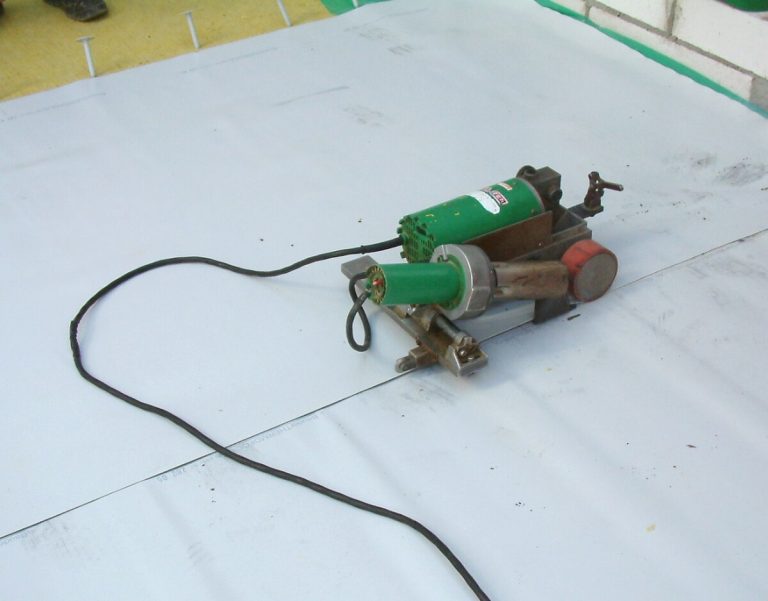
TPO: $6.00–$10.00/sq ft installed in DC. The most common choice for new commercial roofs and replacements. White TPO meets DC’s energy efficiency requirements and reduces urban heat island effect. Heat-welded seams provide excellent waterproofing.
EPDM: $5.00–$9.00/sq ft in DC. Still widely used on DC commercial buildings, particularly for recovers and budget-conscious projects. Black EPDM is being phased out in favor of white for energy compliance, but remains common on existing buildings.
PVC: $7.00–$12.00/sq ft in DC. Preferred for buildings with rooftop restaurants, commercial kitchens, or chemical exposure. PVC’s superior chemical resistance makes it ideal for DC’s many mixed-use buildings with food service tenants.
Modified bitumen: $5.50–$9.50/sq ft in DC. Common on older DC commercial buildings and rowhouse-style commercial properties. Multi-layer construction provides redundant waterproofing.
Built-up roofing (BUR): $6.50–$11.00/sq ft in DC. Still found on some legacy DC buildings, particularly government and institutional properties. Hot-applied BUR installation may face restrictions in certain DC neighborhoods due to odor and fume concerns.
What to Look for in a DC Commercial Roofing Contractor
Not all roofing contractors are qualified for commercial work in the District. Here’s what property managers should verify:
DC Basic Business License (BBL): All contractors working in DC must hold a valid BBL with the appropriate construction trade endorsement. Verify through the DC Department of Licensing and Consumer Protection (DLCP).
Manufacturer certifications: For the best warranties, choose a contractor certified by the membrane manufacturer you’re using. Look for certifications like Carlisle SynTec Authorized Applicator, Firestone Building Products Master Contractor, GAF Master Select, or Johns Manville Peak Advantage. These certifications enable NDL (No Dollar Limit) warranties of 15–30 years.
Insurance requirements: Commercial projects in DC should require general liability insurance of at least $1,000,000 per occurrence / $2,000,000 aggregate. Workers’ compensation coverage is mandatory in DC. Many DC property management companies and building owners require $5M+ umbrella coverage for larger projects.
DC experience: The contractor should have a documented track record of commercial projects within the District — not just in the surrounding suburbs. DC’s permitting, logistics, and regulatory environment are distinct, and experience matters.
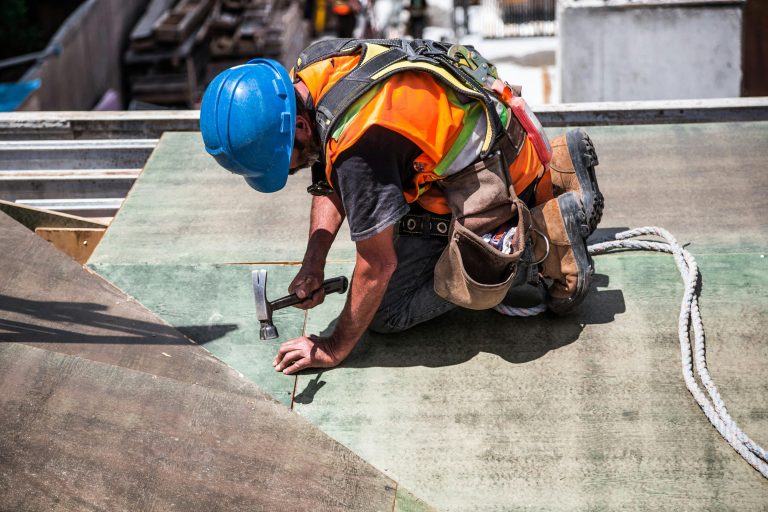
Safety program: Ask about their safety record, OSHA compliance, and EMR (Experience Modification Rate). An EMR under 1.0 indicates a better-than-average safety record. DC-specific safety requirements include fall protection compliance and lead paint awareness (common in older DC commercial buildings).
Cost Expectations for DC Commercial Flat Roofing
DC commercial roofing costs run 15–25% higher than suburban markets due to labor rates, permitting, and logistics. Here are typical ranges for 2026:
Small commercial (2,500–5,000 sq ft): $20,000–$55,000
Mid-size commercial (5,000–15,000 sq ft): $45,000–$160,000
Large commercial (15,000–50,000 sq ft): $110,000–$500,000+
These ranges include materials, labor, insulation, accessories, permits, and standard logistical costs. Crane work, extensive phasing, or hazardous material abatement are additional.
The Bidding Process: Getting It Right
For DC commercial projects, a structured bidding process ensures you get quality work at fair pricing:
Develop a scope of work: Before soliciting bids, define what you need — full tear-off vs. recover, membrane type, insulation R-value requirements, warranty expectations, phasing needs, and schedule. Unclear scopes lead to incomparable bids.
Solicit 3–5 bids: Invite qualified, licensed, manufacturer-certified contractors to bid. Use our guide to hiring a licensed roofing contractor in DC to vet candidates. Provide the same scope document to each.
Evaluate beyond price: The lowest bid isn’t always the best value. Compare: warranty terms (NDL vs. material-only), crew experience and size, projected timeline, references from similar DC projects, and safety record.
Check references: Call at least three references for each finalist. Ask about quality, communication, timeline adherence, change order handling, and warranty service responsiveness.
Maintenance Contracts: Protecting Your Investment
Once your DC commercial roof is replaced, a proactive maintenance program extends its life and prevents costly emergency repairs:
Semi-annual inspections: Most commercial roofing contractors offer maintenance contracts that include spring and fall inspections. In DC, these typically cost $300–$800 per visit for a standard commercial roof.
What’s included: Drain clearing, seam inspection, flashing checks, debris removal, and minor repairs. DC’s tree canopy means leaf and debris accumulation on flat roofs is a constant issue — blocked drains are the #1 cause of commercial flat roof failures.
Warranty preservation: Most manufacturer warranties require documented regular maintenance. Skipping maintenance can void your warranty — an expensive mistake on a commercial roof.
DC Green Roof and Solar Considerations
Washington DC leads the nation in green building, and commercial roof replacements are an opportunity to integrate sustainable features:
Green roofs: DC offers the Green Roof Rebate Program, providing up to $15 per square foot for qualifying green roof installations on commercial buildings. A green roof can reduce stormwater fees, improve energy efficiency, and enhance property value.
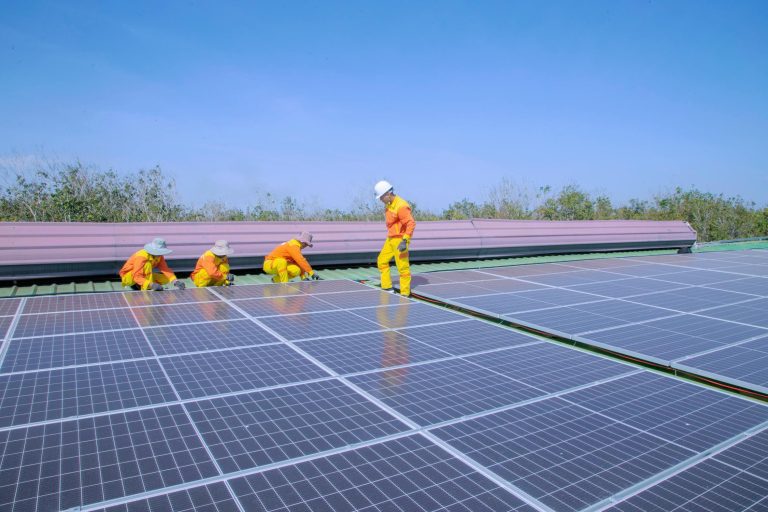
Solar readiness: DC’s Solar for All program and federal Investment Tax Credit (ITC) make rooftop solar increasingly attractive. When replacing your commercial roof, consider a solar-ready installation — proper membrane selection and structural evaluation now saves significant cost when solar is added later.
Cool roof benefits: White TPO and PVC membranes qualify as cool roofs, reducing the urban heat island effect and lowering cooling costs by 10–25%. DC’s green building incentives favor cool roof installations.
Related Reading
Get a Free Roofing Estimate
Managing a commercial property in DC? Getting detailed, competitive estimates from experienced DC commercial roofing contractors is the first step toward protecting your building and your budget. Compare systems, warranties, and pricing with no obligation.