Metal Roofing Cost and Installation Guide for East Coast Homeowners
Why Metal Roofing Is Surging in Popularity on the East Coast
Metal roofing has gone from a niche choice to one of the fastest-growing residential roofing materials on the East Coast. In Maryland, Virginia, Washington DC, and Pennsylvania, metal roof installations have increased dramatically over the past decade — and for good reason. Homeowners are tired of replacing asphalt shingle roofs every 15–20 years and are looking for something that lasts, performs in severe weather, and adds real value to their home.
But metal roofing is also a significant investment — typically 2–3 times the cost of asphalt shingles upfront. Understanding the true costs, the different types of metal roofing, and the long-term economics is essential before making this decision.
This guide provides a complete breakdown of metal roofing costs specific to the Mid-Atlantic market, compares the major metal roofing types, and helps you determine whether the investment makes sense for your home.
Standing Seam vs. Corrugated: Understanding Your Options
The term “metal roofing” covers a range of products with very different price points, appearances, and performance characteristics. For residential applications on the East Coast, two types dominate the market.
Standing Seam Metal Roofing
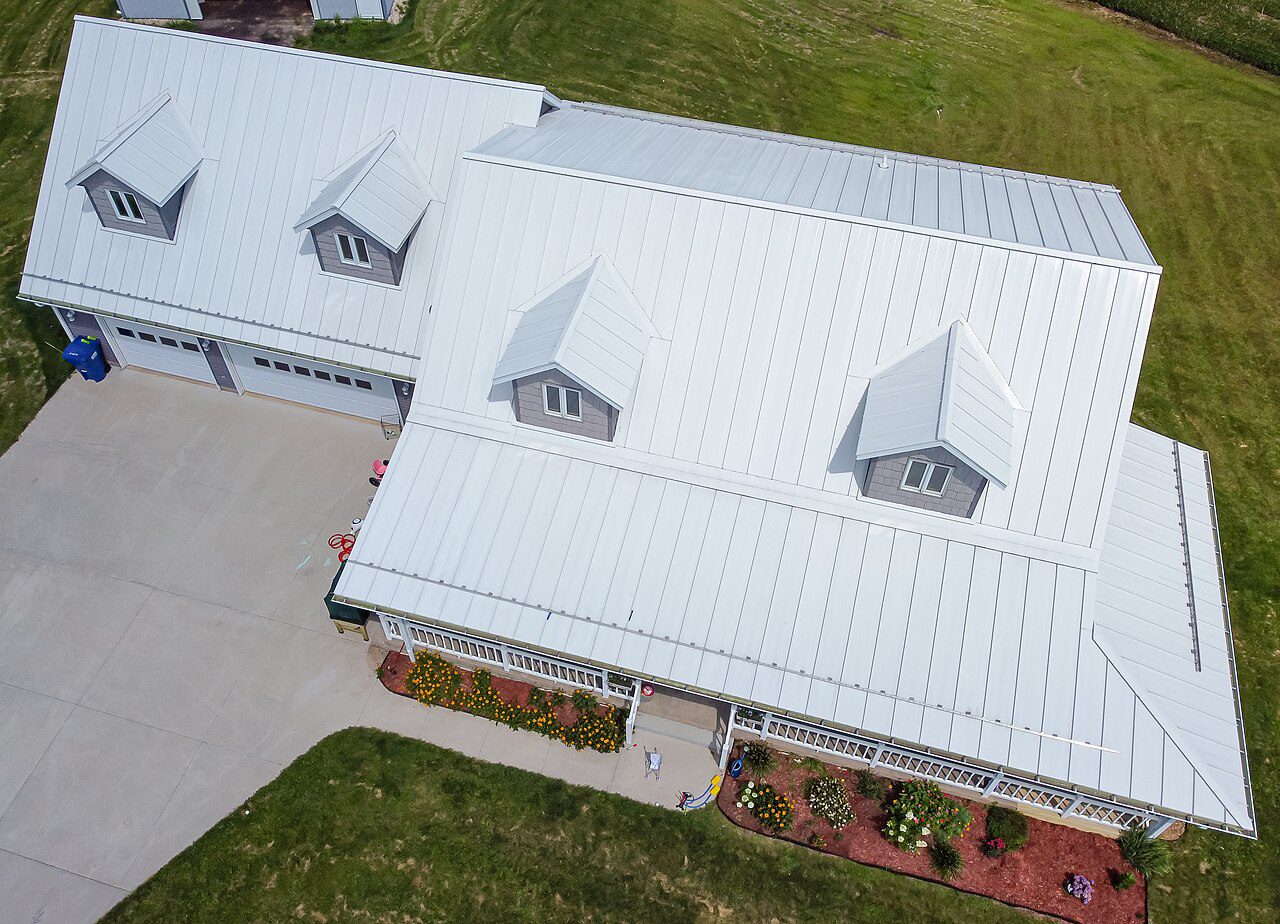
Standing seam is the premium residential metal roofing option. It features long, continuous panels that run from the ridge to the eave, connected by raised interlocking seams that stand 1–2 inches above the panel surface.
Key characteristics:
- No exposed fasteners: Panels are secured with concealed clips beneath the seams. No screws or nails penetrate the roof surface, eliminating the most common source of leaks in metal roofing.
- Thermal movement: The clip system allows panels to expand and contract freely with temperature changes — critical in the Mid-Atlantic where roof surface temperatures can swing 100°F+ between winter and summer.
- Clean, modern appearance: The vertical lines and smooth surface give homes a contemporary, high-end look. Standing seam is the most aesthetically versatile metal roofing option.
- Lifespan: 40–70 years with proper installation
Corrugated and Ribbed Metal Panels
Corrugated (exposed fastener) metal roofing uses panels with wave-like or ribbed profiles, secured to the roof with screws that penetrate through the panel face into the deck below.
Key characteristics:
- Exposed fasteners: Screws with rubber washers penetrate the panel surface. These washers are the system’s weak point — UV exposure degrades the rubber, eventually allowing water intrusion. Expect to replace or reseal fasteners at least once during the roof’s life (typically at the 15–20 year mark).
- Less thermal flexibility: Because panels are screwed directly to the deck, thermal expansion and contraction work against the fasteners, contributing to their eventual loosening.
- Variety of profiles: Available in classic corrugated, R-panel, PBR panel, and other profiles that range from agricultural/industrial to residential-appropriate.
- Lifespan: 25–40 years (limited by fastener and washer degradation)
Metal Roofing Cost Breakdown: Mid-Atlantic Prices
Metal roofing costs vary significantly across the Mid-Atlantic based on metro area labor rates, material choices, and roof complexity. Here’s a detailed breakdown for 2026.
Standing Seam — Cost Per Square Foot (Installed)
- Maryland (Baltimore metro): $10–$16 per square foot
- Maryland (Eastern Shore/Western MD): $9–$14 per square foot
- Virginia (Northern Virginia/DC suburbs): $11–$17 per square foot
- Virginia (Hampton Roads/Richmond): $9–$15 per square foot
- Washington DC: $12–$18 per square foot
- Pennsylvania (Philadelphia metro): $10–$16 per square foot
- Pennsylvania (Pittsburgh/Central PA): $9–$14 per square foot
For a typical 2,000 sq ft roof: $18,000–$36,000 depending on location and material choice.
Corrugated/Exposed Fastener — Cost Per Square Foot (Installed)
- Maryland: $5–$9 per square foot
- Virginia: $5–$9 per square foot
- Washington DC: $6–$10 per square foot
- Pennsylvania: $5–$9 per square foot
For a typical 2,000 sq ft roof: $10,000–$20,000 depending on location and material choice.
What Drives the Price Range
Several factors determine where your project falls within these ranges:
- Metal type: Galvalume steel (most common, least expensive) vs. aluminum (15–25% more, better for coastal properties) vs. zinc or copper (premium, 2–4x the cost of steel)
- Panel gauge: 26-gauge (thinner, less expensive) vs. 24-gauge (thicker, more durable, recommended for residential) vs. 22-gauge (heaviest, premium)
- Paint system: Standard SMP paint (15–25 year color warranty) vs. Kynar/PVDF paint (30–40 year color warranty, the gold standard for standing seam)
- Roof complexity: Simple gable roofs are straightforward. Hips, valleys, dormers, skylights, and multiple roof planes add significant labor cost — typically 20–40% above a simple roof.
- Accessibility: Multi-story homes, steep slopes, and limited access add cost for equipment (cranes, scaffolding) and increased labor time.
- Tear-off requirements: Removing an existing roof adds $1–$3 per square foot. In some cases, metal can be installed over existing asphalt shingles (with proper furring strips and ventilation), saving tear-off costs.
Cost Comparison: Metal vs. Asphalt Over Time
The upfront cost comparison makes asphalt look cheaper. The lifetime cost comparison tells a different story:
- Asphalt architectural shingles: $7,000–$15,000 installed for a 2,000 sq ft roof, lasting 20–25 years. Over 50 years, you’ll need 2–3 roof replacements: $14,000–$45,000 total. Check current roof replacement costs in Virginia for updated pricing.
- Standing seam metal: $18,000–$36,000 installed for a 2,000 sq ft roof, lasting 40–70 years. Over 50 years, you’ll need 1 roof with possibly a coating restoration: $18,000–$41,000 total.
When you factor in lower maintenance costs, better energy efficiency, and higher home resale value, standing seam metal often wins the lifetime cost comparison — especially if you plan to stay in your home for 15+ years.
Energy Savings: The Hidden Value
Metal roofing’s energy performance is one of its most underappreciated advantages, particularly in the Mid-Atlantic where both heating and cooling costs are significant.
Summer Cooling Savings
Metal roofs with reflective coatings (“cool roof” rated) can reduce cooling costs by 10–25% compared to dark asphalt shingles. Here’s how this translates for Mid-Atlantic homeowners:
- Average Mid-Atlantic home cooling cost: $600–$1,200 per summer
- 10–25% savings: $60–$300 per summer
- Over 50 years: $3,000–$15,000 in cumulative cooling savings
Light-colored metal roofing (white, light gray, tan) with Kynar coatings achieves the highest solar reflectance. Even medium colors reflect significantly more heat than asphalt shingles.
Winter Heating Benefits
Metal roofing’s energy story in winter is more nuanced. Metal itself doesn’t insulate — the insulation below the metal does the work. However, metal roofing systems are typically installed with better insulation practices than asphalt shingle roofs, and the lack of granule loss or material degradation means the insulation system performs consistently throughout the roof’s life.
Additionally, metal’s ability to shed snow quickly means less insulating snow load that can create ice dams and associated heat loss.
Tax Credits and Incentives
Energy-efficient metal roofing may qualify for federal and state incentives:
- Federal tax credit: ENERGY STAR-rated metal roofing qualifies for the Energy Efficient Home Improvement Credit — up to 30% of material costs, capped at $1,200 per year for roofing. This applies to ENERGY STAR-certified metal roofing products with appropriate solar reflectance.
- Maryland: State incentives through the Maryland Energy Administration for energy-efficient building improvements
- Virginia: PACE financing available in participating localities for energy-efficient roofing
- DC: Green building incentives through the DC Department of Energy and Environment
- Pennsylvania: Some utility companies offer rebates for cool roofing installation
Metal Roofing Lifespan: What to Realistically Expect
Metal roofing manufacturers advertise impressive lifespan numbers, and they’re largely accurate — but with important caveats.
Standing Seam: 40–70 Years
The panels themselves can last indefinitely — metal doesn’t rot, crack, or degrade the way organic materials do. The limiting factors are:
- Coating life: Kynar/PVDF coatings maintain color and reflectivity for 30–40 years. SMP coatings show noticeable fading after 15–25 years. Coating restoration (repainting) at the 30–40 year mark can extend the system another 20–30 years at a fraction of replacement cost.
- Fastener and clip life: Concealed clips on standing seam systems last the life of the panels. Flashing sealants and trim caulking may need attention at 15–25 years.
- Underlayment: The waterproofing membrane beneath the panels has a finite life (30–50 years for premium synthetic). This is the component most likely to require attention during the panel lifespan.
Corrugated/Exposed Fastener: 25–40 Years
The panels can last 40+ years, but the exposed fastener system limits overall roof life:
- Fastener washers: Rubber/neoprene washers degrade under UV exposure, losing their seal after 15–20 years. All fasteners should be inspected and replaced or resealed at this point.
- Fastener loosening: Thermal cycling works fasteners loose over time. Annual tightening during early years and eventual replacement is part of the maintenance program.
- Panel holes: Each fastener penetration is a potential leak point. As holes elongate from thermal movement, leak risk increases.
Installation Considerations for East Coast Homes
Metal roofing installation is more specialized than asphalt shingle work. Here’s what to know about the installation process:
Choosing a Contractor
Not every roofing contractor is qualified to install metal roofing. Metal work requires different skills, tools, and experience than shingle installation. Look for:
- Metal-specific experience: Ask how many metal roofs they’ve installed in the past year. A minimum of 10–20 residential metal installations annually indicates meaningful experience.
- Manufacturer training: Many metal roofing manufacturers offer installer certification programs. Certified installers provide better warranties.
- Portfolio: Ask to see completed projects, ideally in your area so you can drive by and see the work in person.
- Metal-specific references: General roofing references aren’t sufficient. Talk to homeowners who had metal roofs installed by this contractor.
Installation Timeline
Metal roofing installation takes longer than asphalt shingles:
- Asphalt shingles: Most residential roofs completed in 1–3 days
- Standing seam metal: 3–7 days for a typical residential roof, plus 1–2 weeks lead time for custom-fabricated panels
- Corrugated metal: 2–4 days for installation, shorter lead time for stock panels
Best Installation Season
Metal can be installed year-round (unlike some membrane systems that require warm temperatures), but the optimal window in the Mid-Atlantic is:
- Late spring (April–May): Mild temperatures, lower humidity, before thunderstorm season peaks
- Early fall (September–October): Cooling temperatures, typically drier weather, before winter
Avoid scheduling during peak summer heat (panels become extremely hot to handle) or during winter if possible (cold metal is harder to cut and handle, and sealants cure more slowly).
Over-Existing-Roof Installation
In some cases, metal roofing can be installed over existing asphalt shingles using furring strips (purlins) that create an air gap between the old roof and new metal. This approach:
- Saves money: Eliminates tear-off and disposal costs ($1–$3/sq ft)
- Adds insulation: The air gap provides additional thermal separation
- Has limitations: Only works if there’s one existing layer, the deck is structurally sound, and local building code allows it. Your contractor should inspect thoroughly before recommending this approach.
Common Concerns Addressed
“Won’t Metal Roofing Be Loud in Rain?”
This is the most common misconception. Modern residential metal roofing installed over solid deck sheathing and with proper insulation is no louder than asphalt shingles during rain. The solid deck and insulation absorb sound. The “tin roof in a rainstorm” experience comes from agricultural buildings where metal is installed on open purlins with no deck or insulation.
“Will It Attract Lightning?”
Metal roofing does not attract lightning. Lightning strikes the highest point in an area regardless of material. In the unlikely event lightning does strike a metal roof, the metal actually disperses the energy safely — it won’t catch fire like wood shingles or organic materials can. Metal roofing is one of the safest materials during electrical storms.
“Won’t It Dent in Hail?”
Metal roofing has excellent hail resistance. Most standing seam products carry Class 4 impact ratings (the highest available), meaning they can withstand 2-inch hail impacts without damage. Many insurance companies offer premium discounts (5–35%) for Class 4 rated roofing. Check with your insurer — the discount can significantly offset the higher cost of metal.
“Can I Walk on It?”
Yes, with care. Standing seam metal roofing can support foot traffic when you walk in the flat areas between seams. Avoid stepping on the seams themselves. Corrugated metal should be walked on at the screw lines where the panel is supported. Soft-soled shoes are recommended. Your installer should show you the safe walking areas for your specific system.
Is Metal Roofing Right for Your Home?
Metal roofing makes the most financial sense when:
- You plan to stay in your home for 15+ years (enough time to recoup the premium over asphalt)
- Your home is in a high-wind or severe weather area (coastal VA/MD, mountain PA)
- You want to minimize long-term maintenance
- Energy efficiency is important to you
- You value the aesthetic and curb appeal of metal
- Your homeowners insurance offers a premium discount for impact-resistant roofing
Metal roofing may not be the best choice when:
- You’re selling the home within 5 years (unlikely to recoup the premium)
- Budget is the primary concern and you need the lowest upfront cost
- Your HOA restricts metal roofing (check covenants before getting estimates)
Related Reading
- best roofing materials for Mid-Atlantic weather
- roof replacement cost in Maryland
- Pennsylvania roof replacement costs
Get an Accurate Metal Roofing Estimate
Metal roofing prices vary widely based on your specific home, location, and material choices. The only way to know your actual cost is to get a detailed estimate from a contractor experienced in residential metal roofing.
Request your free metal roofing estimate today and get an accurate, detailed quote from a licensed metal roofing specialist in your area. Our contractor network includes experienced metal roofing installers throughout Maryland, Virginia, Washington DC, and Pennsylvania.